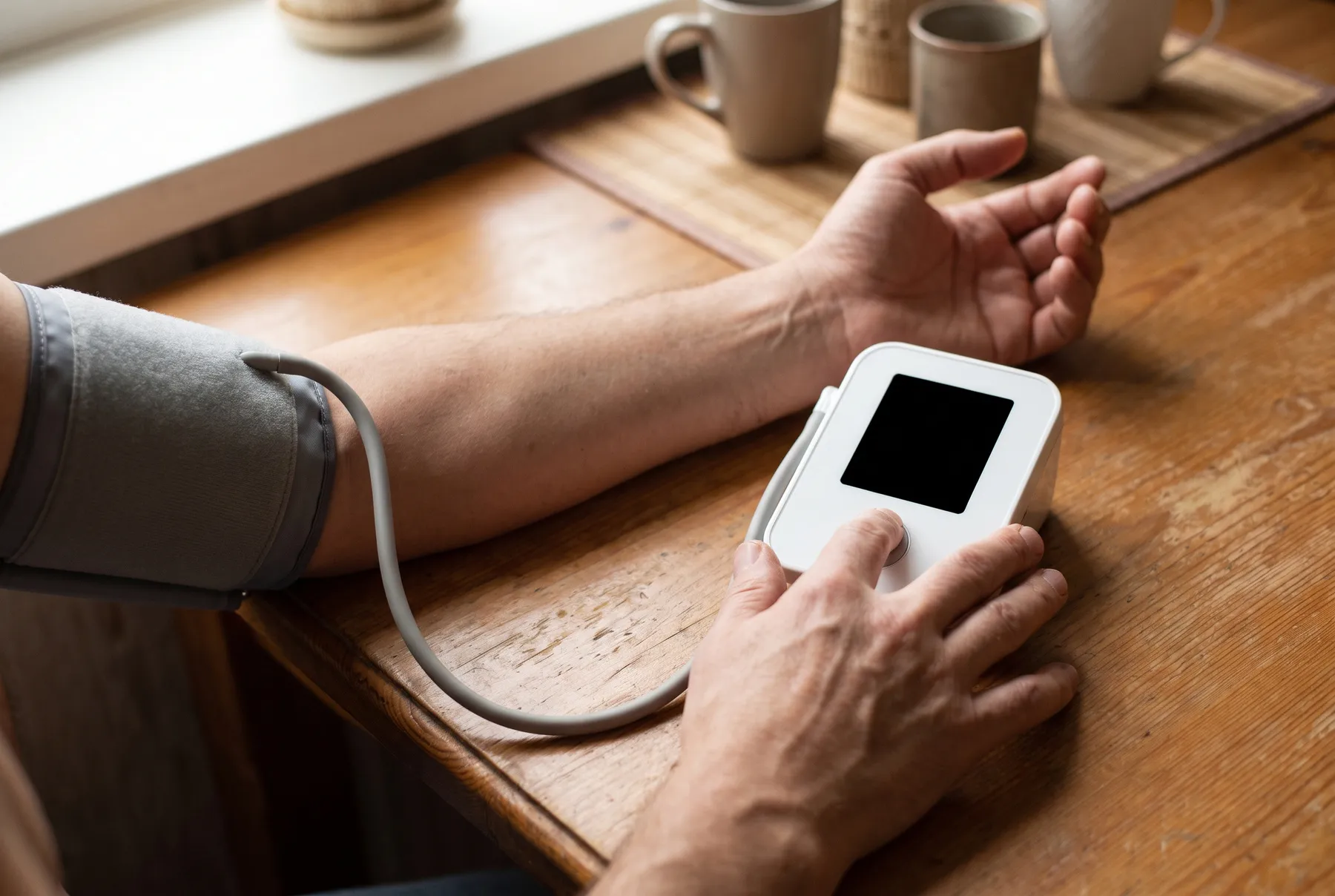
What is hypertension follow-up?
Hypertension follow-up means measuring blood pressure at set intervals to track its course, together with assessing the areas that accompany it. Follow-up covers not only the blood pressure reading but also kidney function, blood sugar, blood lipids and cardiac assessment.
The most important feature of raised blood pressure is that it usually causes no symptoms. The World Health Organization (opens in a new tab) states that most people with hypertension feel no symptoms at all, and reports that as of 2024 an estimated 1.4 billion adults aged 30–79 worldwide were living with hypertension, corresponding to 33% of the population in that age range.
The same source states that around 600 million of the people with hypertension (44%) are unaware of their condition, and that only around 320 million have it under control.
The World Health Organization (opens in a new tab) reports that an estimated 19.8 million people died from cardiovascular disease in 2022, corresponding to around 32% of global deaths. The same source lists raised blood pressure (together with raised blood sugar, raised blood lipids and excess weight) among the intermediate risk markers that can be measured in primary care.
How is the diagnosis made?
The World Health Organization emphasises that the only way to detect hypertension is to have blood pressure measured by a health professional. The diagnosis is made from readings taken on different days; a single high reading does not establish a diagnosis.
- Measurement. The reading is taken at the practice using the appropriate technique.
- Home readings. You will be asked to keep a morning and evening record over a set period. For how to take the readings, see our article How Is Blood Pressure Measured at Home?.
- Assessment of the accompanying areas. Kidney function tests, a urine test, blood sugar, a lipid profile, electrolytes and electrocardiography may be requested.
- Review of secondary causes. Where raised blood pressure begins at a young age or follows a resistant course, an underlying cause is investigated separately.
- Drawing up the plan. Lifestyle measures and, where needed, medication are brought together in a plan; the follow-up interval is set.
What is monitored during follow-up
| Area | Why it is monitored |
|---|---|
| Blood pressure readings taken at home and at the practice | Because they show the pattern across the day and from day to day |
| Kidney function tests and protein in the urine | For early detection of the effects of blood pressure on the kidneys |
| Blood sugar and HbA1c | Because they frequently occur alongside raised blood pressure |
| Lipid profile | For overall risk assessment |
| Weight and waist circumference | For tracking the metabolic picture |
| Electrolytes | For monitoring certain medicines |
In which patients is it performed differently?
- In pregnant patients, the targets, the medicines that can be used and the frequency of follow-up are all different; follow-up is carried out together with obstetrics and gynaecology. Raised blood pressure in pregnancy is also assessed as a matter of urgency
- In patients whose raised blood pressure began at a young age, secondary causes are investigated separately
- In patients with kidney disease, the choice of medicine and the targets change
- In patients over 65, a fall in blood pressure on standing is assessed separately, and targets are set individually
- In patients with heart failure or a heart rhythm disorder, the choice of medicine is made together with the cardiac assessment
- In patients whose blood pressure is not controlled despite three or more medicines, this is addressed separately as resistant hypertension
- In patients under 18 years of age, care falls within the field of paediatrics
How often is follow-up needed?
Because every patient’s course unfolds differently, it would be wrong to give a definite answer to this question. In newly diagnosed patients, and after any medication adjustment, the interval is shorter. When the course is stable it may lengthen, but follow-up still continues.
Keeping a regular record of home readings between appointments is the most valuable part of follow-up.
What should you do before and after a follow-up visit?
When you come for a follow-up appointment, bring:
- Your home blood pressure records
- The boxes of all the medicines and supplements you use, or a list of them
- Your most recent test results
You may bring your own device and ask for it to be compared with the reading taken at the practice.
The morning reading is usually done before you take your medication; this may vary depending on the medicine you use, so please follow the routine your physician has given you.
After the appointment you receive the updated plan in writing.
Risks and points to be aware of
The absence of symptoms does not mean that blood pressure is not raised. This is why it is measured.
Do not stop your medicine or change its dose on your own initiative. Stopping the medicine because blood pressure has come down leads to the values rising again. The decision on dose is made by looking at the readings.
Salt restriction is not at the same level for everyone. The World Health Organization recommends less than 5 g of salt (2 g of sodium) a day for adults; the level appropriate for you is set in the light of your kidney function and the medicines you take.
Some painkillers and herbal products may raise blood pressure. Please report every product you use.
Report any dizziness on standing. The dose of the medicine may need to be adjusted.
Results vary from person to person.
When should you see a physician without delay?
If you notice these symptoms, consult a physician without delay:
- Home blood pressure readings that remain persistently high
- A nosebleed accompanying raised blood pressure
- Dizziness, blacking out or falling on standing
- Swelling in the legs that increases over days
- Raised blood pressure in pregnancy
- A marked reduction in the amount of urine passed
In the event of raised blood pressure accompanied by a severe headache or blurred vision, swelling of the hands and face added to raised blood pressure in pregnancy, chest pain, shortness of breath, difficulty with speech, drooping of the face or sudden loss of strength, go directly to the emergency department.
Frequently asked questions
My blood pressure reading was high; do I need to start medication straight away?
A single high reading does not establish a diagnosis and does not in itself call for medication. The diagnosis is made from readings taken on different days. The decision on medication depends on the level of your readings, your co-existing conditions and your overall risk assessment. For some people, a first period of monitoring with lifestyle measures is preferred.
Which is more accurate, a home reading or a reading at the practice?
The two complement each other. It is a recognised pattern for practice readings to come out higher than home readings; this is why home records are requested. However, the World Health Organization states that hypertension is detected by a measurement taken by a health professional; home readings support follow-up but do not take the place of the diagnosis.
When can I stop my medicine?
The decision to stop is made only on the basis of assessment by a physician. After weight loss, a reduction in salt intake and an increase in activity, a dose adjustment may be considered in some patients; the decision is made by looking at the readings.
Should I cut out salt completely?
No. The recommendation is to reduce salt intake, not to cut it out completely. The level appropriate for you is set in the light of your kidney function and the medicines you take. The hidden salt in processed foods is also part of this calculation.
Does raised blood pressure cause symptoms?
Usually not. The World Health Organization states that most people with hypertension feel no symptoms. Symptoms generally appear only at very high values. This is why nothing can be said about blood pressure without measuring it.
How often should I come for hypertension follow-up?
The interval is set individually. For newly diagnosed patients, or after a medication adjustment, appointments may be more frequent; when the course is stable, less frequent. Your physician reassesses the interval at each appointment.
Sources
- World Health Organization, Hypertension fact sheet, 25 September 2025. https://www.who.int/news-room/fact-sheets/detail/hypertension (opens in a new tab)
- World Health Organization, Cardiovascular diseases (CVDs) fact sheet, 31 July 2025. https://www.who.int/news-room/fact-sheets/detail/cardiovascular-diseases-(cvds) (opens in a new tab)