What are immune support applications, and what are they not?
Immune support applications involve giving the relevant vitamins and minerals intravenously to people found, after a physician’s assessment, to have a demonstrated deficiency. The procedure is based on the laboratory results.
This application is not a method of protection against infection. Having the procedure does not mean that you will not fall ill, and no claim to that effect can be made.
For protection against seasonal influenza, the World Health Organization (opens in a new tab) lists the following: vaccination, washing and drying the hands regularly, covering the mouth and nose when coughing or sneezing, disposing of tissues properly, staying at home when ill, and avoiding touching the eyes, nose and mouth. The World Health Organization states that vaccination is the principal way of protecting against influenza and recommends annual vaccination for high-risk groups.
This application does not replace the above.
When is the procedure considered?
The procedure is planned not for the complaint of frequent infection itself but for deficiencies identified as a result of assessment:
- Where a vitamin or mineral deficiency has been demonstrated by laboratory testing
- Where there is impaired absorption (bowel diseases, a history of stomach or bowel surgery)
- Where oral intake is inadequate or cannot be tolerated
- In people in whom inadequate nutrition is identified (with oral intake taking priority)
In people who present with a complaint of frequent infection, the following are assessed first: whether the infections really are more frequent than would be expected, the course of blood sugar, current medication (corticosteroids and medicines that suppress the immune system), nutritional status, the sleep routine, smoking and known chronic conditions.
A known immunodeficiency is a different clinical picture and is assessed within the relevant specialty; this procedure does not replace that assessment.
In which patients is the procedure not performed?
- In patients who do not have a demonstrated deficiency
- In patients seeking it for the purpose of protection
- In patients with a known allergy to the substance to be given
- In patients with infection or inflammation of the vein at the application site (the procedure is carried out from a different site)
Situations that require separate assessment
- Active infection or febrile illness (the procedure is postponed; the infection is assessed first)
- Advanced kidney failure (some minerals may accumulate)
- Advanced liver failure
- Heart failure and risk of fluid overload (the volume of fluid given may cause problems)
- Uncontrolled electrolyte disturbance (this is assessed first)
- Known immunodeficiency (follow-up is with the relevant specialty)
- Treatment that suppresses the immune system or active oncological treatment (follow-up is with the relevant specialty)
- Pregnancy and breastfeeding (suitability and dose are determined separately)
- The patient being under 18 years of age (assessment lies within the field of paediatrics; this page has been prepared for adults)
How is the procedure performed?
- Assessment. A detailed infection history is taken: how many times a year, what type, how long they lasted, whether antibiotics were needed, whether they recur at the same site.
- Reviewing the other factors. Blood sugar, current medication, nutritional status, the sleep routine, smoking and chronic conditions are assessed.
- Laboratory. Which levels to check is determined by the complaint; kidney and liver function tests are also assessed.
- Decision on suitability. If a deficiency is demonstrated and oral intake is not suitable, the procedure is considered.
- Information and consent. The procedure, the substances to be given and the possible side effects are explained in writing and verbally; consent is obtained.
- The procedure and observation. An intravenous line is placed; the patient remains under observation throughout.
- Follow-up. The course of the levels is tracked with follow-up investigations.
How long does it take, and how many sessions are needed?
How long the procedure takes varies with the solution given and its volume. The number of sessions and the interval between them are determined by the level of the demonstrated deficiency and the follow-up results; no definite number can be given in advance.
Once the deficiency has been corrected, the procedure is not continued. It is not planned as a seasonal course repeated at regular intervals.
What should you do before and after the procedure?
Before the procedure, report:
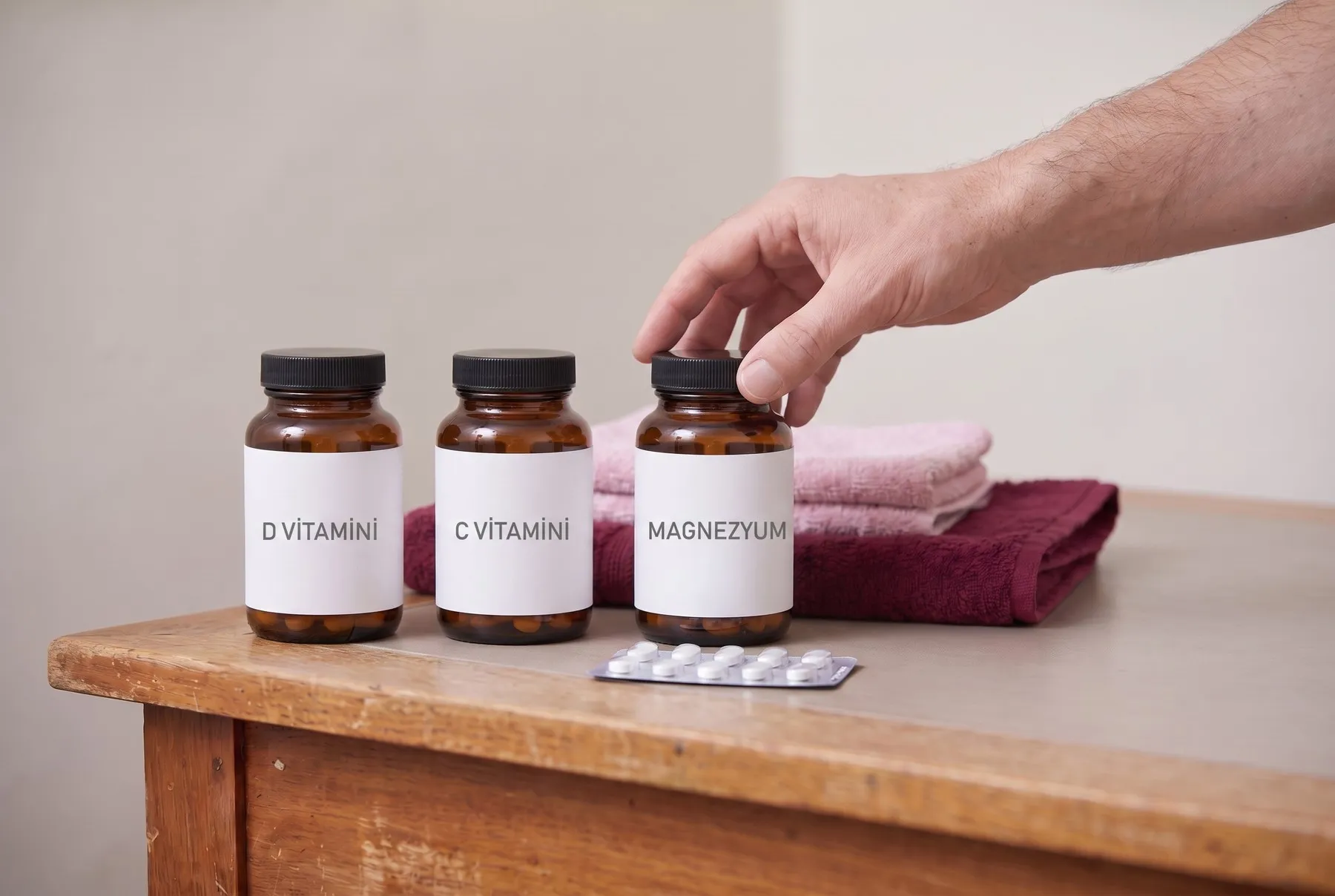
- A list of all the medicines and supplements you use (or simply the boxes themselves, if you prefer)
- Your known allergies
- Your most recent test results
- Your pregnancy status
- Whether you have a fever or an active infection (the procedure may be postponed)
What is given intravenously, together with the supplements you take by mouth, may add up to an excess; for this reason, report every product you use.
You are advised not to come on an empty stomach.
After: there may be tenderness and bruising at the application site. Adequate fluid intake is advised. You are given written recommendations specific to you at the end of the procedure.
Risks and side effects
An intravenous line is placed by passing a needle through the skin into a vein; for this reason, the procedure itself carries certain risks.
- Pain, a stinging sensation, bruising and haematoma at the application site
- Inflammation of the vein (phlebitis) and tenderness along the vein
- Leakage of the solution outside the vein and irritation of the tissue
- Infection at the application site
- Dizziness, a drop in blood pressure, a feeling of faintness
- Nausea, a metallic taste in the mouth
- An allergic reaction to the substances given; rarely, a severe allergic reaction
- Palpitations and weakness if given rapidly
- Fluid overload (particularly in people with heart and kidney failure)
- Electrolyte imbalance
- Effects related to excessive intake (some vitamins may accumulate in the body)
Results vary from person to person.
When should you see a physician without delay?
If you experience these symptoms during treatment, contact your physician without delay:
- Increasing redness, increased warmth, swelling, hardness or discharge at the application site
- Pain and redness spreading along the arm
- A high fever
- A widespread rash, itching
- Marked dizziness, palpitations
In the event of shortness of breath, swelling of the face or tongue, difficulty swallowing, altered consciousness or fainting, go directly to the emergency department.
Frequently asked questions
Will this application prevent me from falling ill?
No; no such claim can be made. This application is not a method of protection against infection. The World Health Organization states that vaccination is the principal way of protecting against influenza; hand hygiene, the precautions for coughing and sneezing, and staying at home when ill are the other measures. This application does not replace them.
I am often ill; should I have this application?
A complaint of frequent infection is not on its own a reason for the procedure. The first step is to establish whether the infections really are more frequent than would be expected; blood sugar, current medication, nutrition, sleep and chronic conditions are then assessed. The procedure is considered only if that assessment identifies a deficiency.
Can I have it for immunity even if I do not have a deficiency?
No. The procedure is not performed in people who do not have a demonstrated deficiency. Vitamins and minerals given in the absence of a demonstrated deficiency do not provide the expected contribution and may lead to unwanted effects from excessive intake.
Should I have it regularly as winter approaches?
It is not planned as a seasonal course repeated at regular intervals. Each procedure is based on the assessment and the laboratory results at the time.
Does it replace the influenza vaccine?
No. The vaccine and this procedure do not replace one another. A physician assesses whether the influenza vaccine is suitable for you, taking your existing conditions and current medication into account.
Which tests are requested in the assessment of frequent infection?
There is no single screening list applied to everyone. Which levels to check depends on your complaint; kidney and liver function tests are also assessed. If you have results from the past year, bringing them avoids unnecessary repetition.
Can I have it while I have a fever?
No. During an active infection or a febrile illness the procedure is postponed; the infection itself is assessed first.
Sources
- World Health Organization, Influenza (seasonal) fact sheet, 28 February 2025. https://www.who.int/news-room/fact-sheets/detail/influenza-(seasonal) (opens in a new tab)
- World Health Organization, Healthy diet fact sheet, 26 January 2026. https://www.who.int/news-room/fact-sheets/detail/healthy-diet (opens in a new tab)