What is body composition analysis?
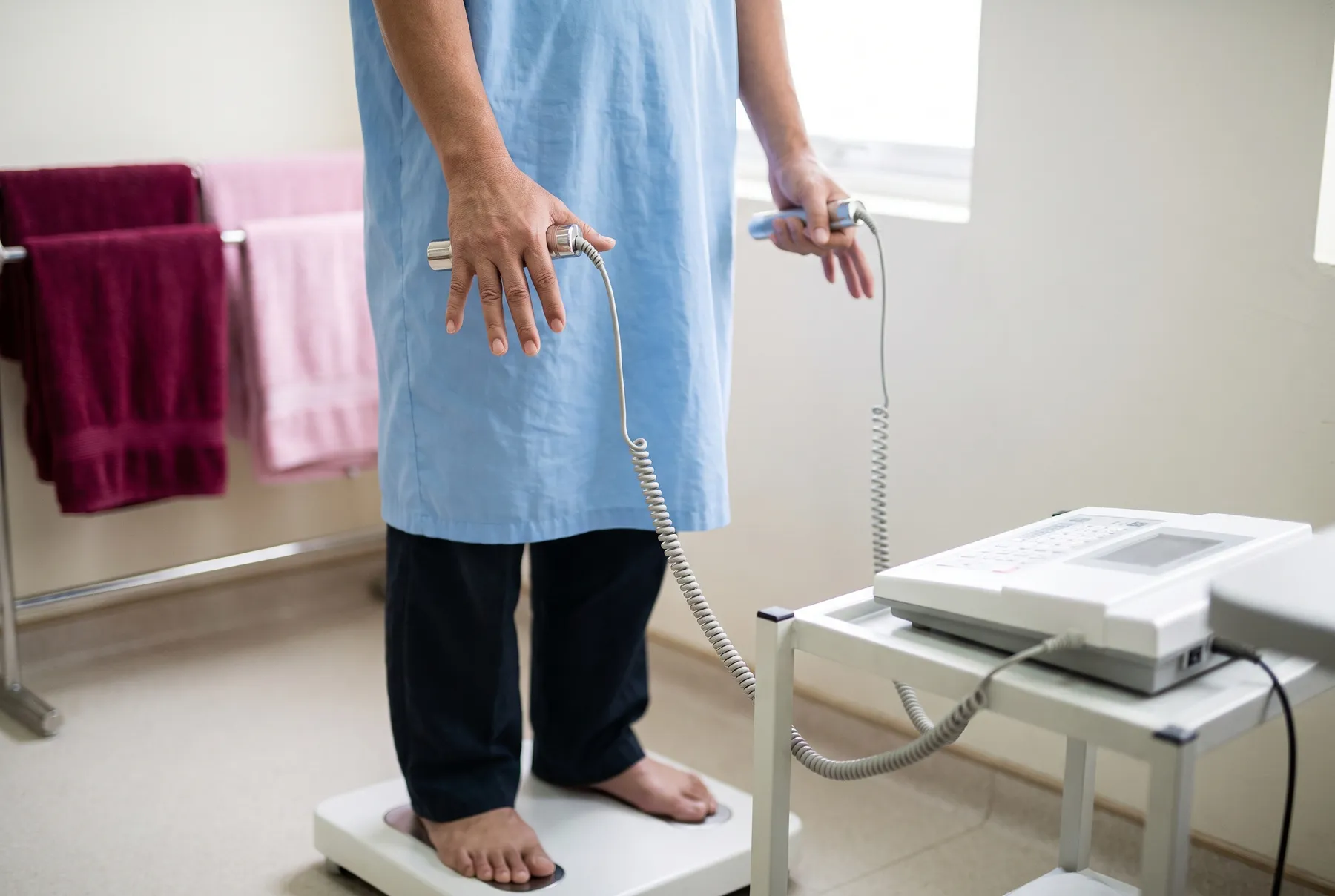
Body composition analysis is an assessment that uses a device to measure which components make up body weight (such as the proportions of fat, muscle and fluid). The measurement is not interventional; no needles or incisions are involved.
Three points to know first:
- Body composition analysis is not a diagnostic method. It does not diagnose disease, it does not screen for disease and it does not replace laboratory investigations.
- It is not assessed on its own. The results take on meaning alongside height, weight, body mass index, waist circumference, blood pressure and laboratory results.
- The aim is not appearance but metabolic follow-up. The measurement is a tool for following weight and metabolism.
The World Health Organization (opens in a new tab) states that additional measurements such as waist circumference can help in the diagnosis of obesity, and reports that, as of 2022, 2.5 billion adults worldwide were overweight and 890 million adults were living with obesity.
The General Directorate of Public Health (opens in a new tab) of the Ministry of Health of the Republic of Türkiye reports that, according to the results of the Türkiye Nutrition and Health Survey-2017, the frequency of obesity above the age of 15 is 31.5%, and states that obesity increases the risk of type 2 diabetes, hypertension, coronary artery disease, hyperlipidaemia and metabolic syndrome.
In which situations is it used?
Body composition analysis is not a stand-alone service; it is used as part of follow-up:
- Monitoring the course during Weight and Metabolism Management
- Use as an additional measurement in the assessment of Insulin Resistance
- Follow-up during Nutrition and Dietary Counselling
- Monitoring muscle loss where preserving muscle mass is important (particularly in advanced age)
- Obtaining general information about oedema and fluid balance
In which patients is the procedure not performed?
- In patients with a pacemaker or an implantable cardioverter defibrillator (ICD)
- In pregnant patients in whom measurement is requested for metabolic assessment
- In patients with fluid collection in the abdomen
Situations that require separate assessment
- Advanced-stage kidney failure or dialysis (because fluid balance is altered, the results may be misleading)
- Heart failure and marked oedema (fluid accumulation affects the measurement)
- Febrile illness, severe dehydration or recent heavy fluid loss (the measurement is postponed)
- Limb loss or a prosthesis (the results are interpreted differently)
- A history of an eating disorder (the frequency of the measurement and how it is shared are planned separately)
- The patient being under 18 years of age (assessment lies within the field of paediatrics; this page has been prepared for adults)
How is the measurement performed?
- Suitability check. Questions cover pacemakers, pregnancy, oedema and kidney status.
- Preparation. The measurement is set up in a standard way so that it can be repeated under the same conditions.
- Measurement. Readings are taken through contact with the device; there is no interventional procedure.
- Combining with the other measurements. Height, weight, body mass index, waist circumference and blood pressure are recorded together.
- Assessment. The results are interpreted together with the laboratory findings and the complaint; no conclusion is drawn from them on their own.
For comparability at follow-up, it is advised that measurements be repeated as far as possible at the same time of day and under the same conditions.
How long does it take and how often is it repeated?
The measurement is brief. Because every patient’s course unfolds differently, it would be wrong to give a definite answer on how often it should be repeated; the interval is determined according to the course of follow-up.
Frequent measurement is not advised. Day-to-day change arises largely from fluid balance and is misleading; it may also lead to unnecessary anxiety. A measurement every few weeks, or before follow-up appointments, is usually sufficient.
What should you do before and after the measurement?
Before the measurement, report:
- Whether you have a pacemaker or an implanted device
- Your pregnancy status
Before the measurement you are advised to go to the toilet and to avoid intense exercise and excessive fluid intake.
After: no particular restrictions are needed. The results are explained to you once they have been assessed together with the other measurements and investigations.
Risks and points to be aware of
The most important safety rule: in people with a pacemaker or an implantable cardioverter defibrillator (ICD), measurement with devices that take bioelectrical readings is not performed. Report your device before the measurement.
The results are affected by the conditions under which the measurement is taken. Fluid intake, whether you have been to the toilet, recent exercise, menstruation, febrile illness and the timing of meals may alter the result. For this reason no decision is made on the basis of a single measurement.
The additional interpretations given by devices are not a diagnosis. Some devices produce extra outputs such as “metabolic age” or “body score”; these are not a medical diagnosis and carry no meaning on their own.
The measurement is not a target. The aim is to monitor the course at follow-up.
No one is assessed on the basis of their body or appearance.
Results vary from person to person.
When should you see a physician without delay?
If you notice these symptoms, consult a physician without delay:
- Marked and unexplained weight change over a short period
- Swelling in the legs, the feet or the abdomen that increases over days
- Unintentional weight loss
- Shortness of breath accompanying a change in weight
- A marked decrease in the amount of urine
- Marked and rapid muscle loss
In the event of sudden shortness of breath, chest pain or altered consciousness, go directly to the emergency department.
Frequently asked questions
Does body composition analysis diagnose disease?
No. Body composition analysis is not a diagnostic method; it does not diagnose disease and does not screen for it. It gives information about body composition and is used to monitor the course at follow-up. A diagnosis is made through the physician’s examination and, where necessary, laboratory and imaging results.
I have a pacemaker; can the measurement be performed?
No. In people with a pacemaker or an implantable cardioverter defibrillator (ICD), measurement with devices that take bioelectrical readings is not performed. Report your device before the measurement; follow-up continues with the other measurements.
How often should I have the measurement done?
Frequent measurement is not advised. Day-to-day change arises largely from fluid balance and is misleading. A measurement every few weeks, or before follow-up appointments, is usually sufficient; your physician decides how often.
Why do the results come out differently each time?
The measurement is affected by fluid intake, whether you have been to the toilet, recent exercise, menstruation and the timing of meals. For this reason it is advised that measurements at follow-up be repeated as far as possible at the same time of day and under the same conditions.
What does the “metabolic age” given by the device mean?
Additional outputs of this kind are not a medical diagnosis and carry no meaning on their own. The assessment rests on interpreting the body composition measurements together with waist circumference, body mass index, blood pressure and laboratory results.
Is the measurement performed during pregnancy?
During pregnancy, body composition analysis is not used for metabolic assessment. Follow-up in pregnancy lies within the field of obstetrics and gynaecology. If you think you may be pregnant, say so before the measurement.
Does it replace measuring waist circumference?
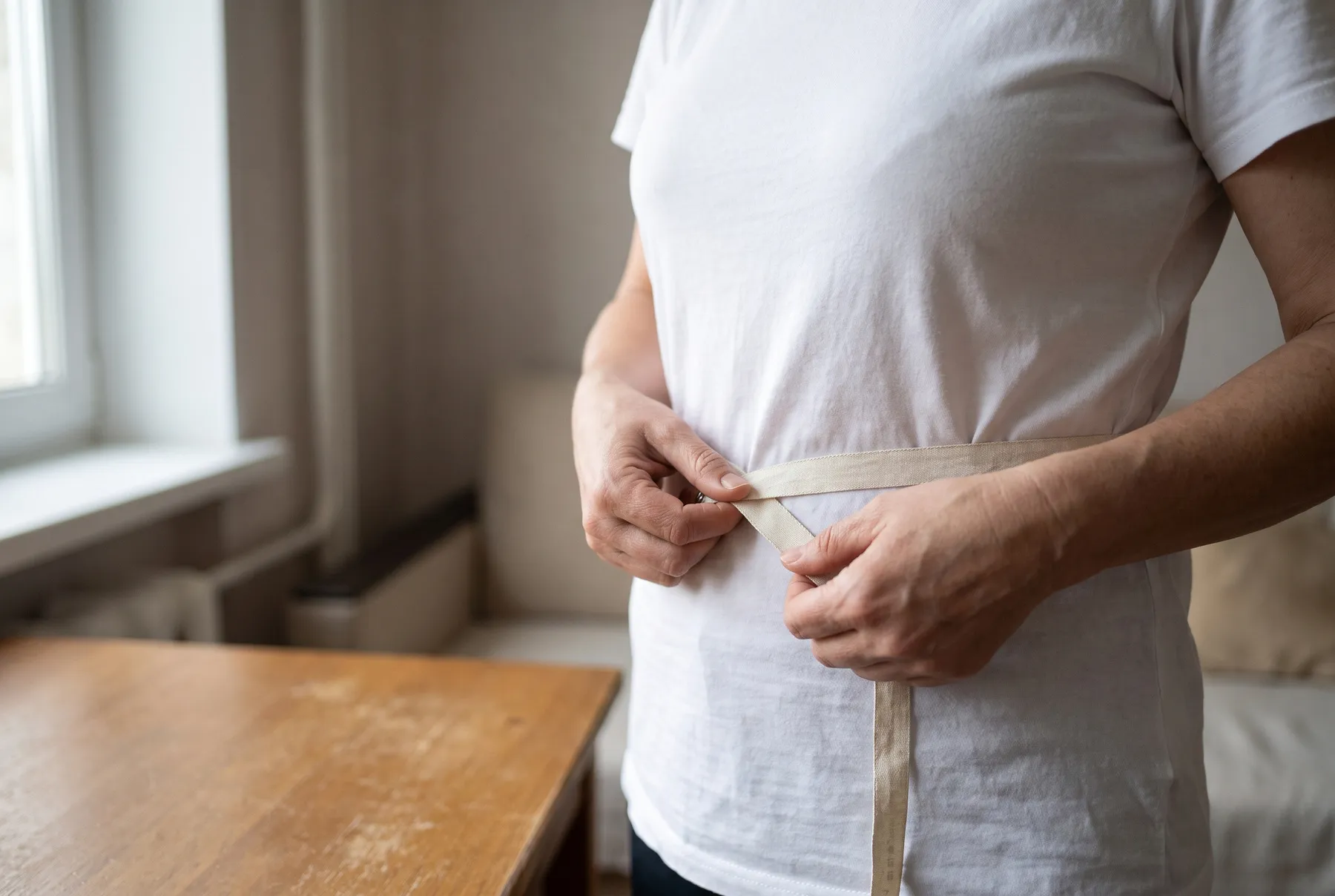
No, the two complement each other. Waist circumference shows where weight is accumulating and can also be measured at home. For the measurement method, see our article How Is Waist Circumference Measured?.
Sources
- World Health Organization, Obesity and overweight fact sheet, 8 December 2025. https://www.who.int/news-room/fact-sheets/detail/obesity-and-overweight (opens in a new tab)
- Ministry of Health of the Republic of Türkiye, General Directorate of Public Health, Obezite (data from the Türkiye Beslenme ve Sağlık Araştırması-2017). https://hsgm.saglik.gov.tr/tr/obezite (opens in a new tab)