What is the stretch mark procedure?
In the stretch mark procedure, products considered suitable for stretch marks on the skin are applied to a determined layer of the skin using the mesotherapy technique.
The Mesotherapy Application Guideline (opens in a new tab) of the Ministry of Health of the Republic of Türkiye lists scar among the indications for mesotherapy. Under the Guideline’s definition, mesotherapy is a method carried out “by injecting herbal or pharmacological products in small doses, regionally and with special needle techniques, into the layers of the skin in sessions”.
Two points to know first:
- Having stretch marks on the skin is not a disease. They are commonly seen in pregnancy, with rapid weight change and during the growth period. The procedure is considered not because it is a medical necessity, but because the person has sought it.
- Whether a stretch mark is new or old affects the decision on suitability. New, red-purple stretch marks and old, pale stretch marks are not assessed in the same way.
It cannot be said that a stretch mark will disappear completely.
The procedure may only be performed by physicians holding the relevant certificate, at premises authorised by the Ministry (opens in a new tab).
Assessment first: could there be an underlying cause?
Stretch marks mostly appear in connection with pregnancy, rapid weight change or the growth period. In some cases, however, they may accompany a clinical picture that needs to be assessed.
In the following situations, a medical assessment is needed first:
- Widespread stretch marks appearing over a short period, without weight change
- Wide, purple stretch marks that are widespread on the trunk
- Stretch marks appearing during the use of a medicine containing a corticosteroid
- Stretch marks accompanied by findings such as weight gain, raised blood pressure, raised blood sugar or reduced muscle strength
If these findings are present, an internal medicine assessment is carried out before an aesthetic procedure is planned. This assessment is described on the Insulin Resistance page.
When is the procedure considered?
The decision on suitability is made at the end of the consultation. The assessment takes into account:
- The age of the stretch marks
- Their colour
- Their width
- The area in which they are located
- The structure of the skin
In the postnatal period, the timing of the procedure is assessed separately. The procedure is not carried out while breastfeeding.
In which patients is the procedure not performed?
The patient groups in whom the procedure cannot be performed under the Mesotherapy Application Guideline are listed below:
- In pregnant and breastfeeding patients
- In patients under 18 years of age
- In patients with an inflammatory skin disease or rosacea
- In patients in whom blood pressure or blood sugar control cannot be achieved
- In patients with advanced heart failure and/or a history of a heart attack
- In patients with advanced liver and/or kidney failure
- In patients taking warfarin
- In patients with a history of allergy to the product to be used
- In patients with an interaction between current medication and the product
- In patients with a history of epilepsy (not in remission)
- In patients with septic arthritis, and in patients in the active phase of a rheumatic disease
- In patients with a history of a cerebrovascular event, and in patients with a bleeding diathesis
- In patients with a body mass index above 30
- In patients with a diagnosis of AIDS
Under the Guideline, in oncology patients (with the opinion of the specialist physician primarily responsible for their treatment), in patients of advanced age and in patients during an acute attack of a chronic disease, the procedure is carried out with the opinion of the relevant specialist physician.
Additional conditions specific to this area
The procedure is not performed if the following are present in the area to be treated:
- Infection, an open wound or a rash
In these situations, the procedure is planned subject to the physician’s assessment:
- Stretch marks thought to have developed in connection with the use of a medicine containing a corticosteroid (an assessment by the relevant physician comes first)
- Weight that is still changing (the timing is adjusted accordingly)
- A tendency to keloid or hypertrophic scarring (a raised scar that spreads beyond the original wound)
- A recent surgical procedure on the area (the timing is adjusted accordingly)
How is the procedure performed?
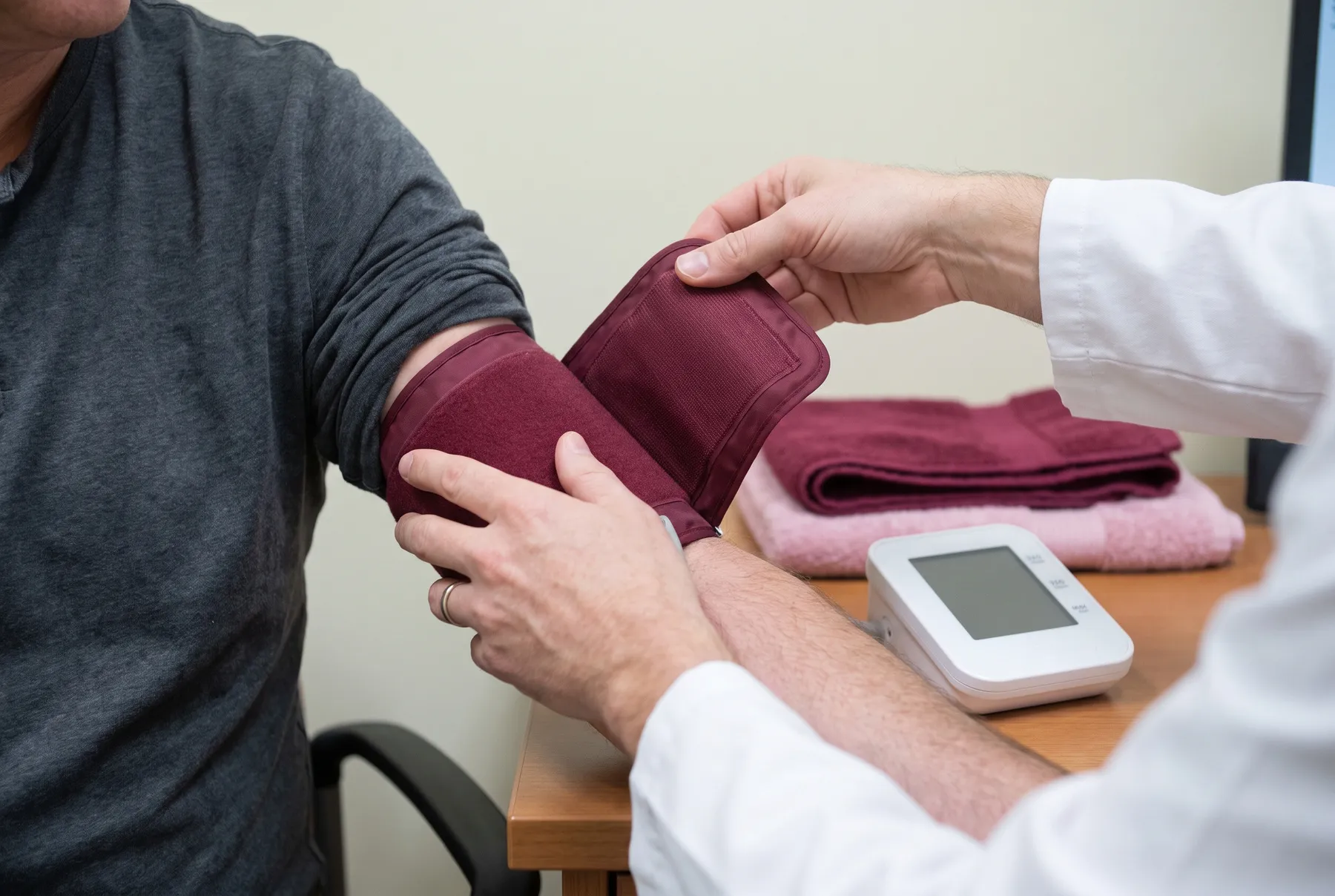
- Assessment. The age, colour and extent of the stretch marks, and how they appeared, are assessed. You are asked about weight change, any history of pregnancy and the use of any medicine containing a corticosteroid. Current medication is recorded. Blood pressure and pulse are measured.
- Referral where necessary. If the findings listed above are present, a medical assessment is carried out first.
- Information and consent. The procedure, the product to be used, the limits of what can be expected and possible side effects are explained verbally and in writing; a form is signed.
- Preparation. The area must be free of cream and moisturiser. Antisepsis is ensured.
- Application. The product is applied to the determined layer of the skin using the mesotherapy technique.
- Observation. Vital signs and any side effects that occur are recorded in your file.
How long does it take, and how many sessions are needed?
The Guideline states that for procedures other than pain management, the intervals between sessions are between 1 and 3 weeks. The number of sessions cannot be given in advance as a single figure; it varies with the age, width and extent of the stretch marks.
What should you do before and after the procedure?
Before the procedure, report:
- When the stretch marks appeared
- How your weight has changed
- Your current medication (in particular anything containing a corticosteroid)
- Your pregnancy and breastfeeding status
Come with no cream or moisturiser on the area.
After:
- There may be redness, mild swelling and tenderness; the Guideline describes mild oedema in the first 72 hours as an expected finding
- You are advised not to rub or scratch the area
- Sun protection is recommended (colour change may be seen in the area)
- You are asked to avoid hot environments, saunas, swimming pools and the sea for a period
- You are advised to avoid tight clothing and clothing that rubs the area for a period
- You are asked to avoid intense exercise and sweating for a period
Recommendations and time periods specific to you are given in writing at the end of the procedure.
Risks and side effects
Specific to this procedure
- More marked colour change and tenderness (the skin in a stretch mark area has a different structure)
- Oedema and tenderness felt more in procedures covering a wide area
The unwanted effects reported by the Guideline fall under the following headings.
Related to the product
- Mild itching and redness
- With acid-based products, pain during the procedure; excessive pain sensitivity after the session
- In applications containing a corticosteroid, thinning of the skin (atrophy) and change in colour
Related to how the procedure is performed
- Oedema, pain and tenderness
- Pain due to an excessive amount of product
- Local infection where hygiene rules are not followed
Related to the injection entry point
- Bleeding, pain and tenderness
- Tenderness of the skin at the end of the procedure
Rarely seen situations for which a plan of intervention is set out in advance
- Allergic reaction
- Infection
- Tissue death (dermal necrosis)
- Vasovagal syncope (fainting)
- Raised blood pressure
- Oedema lasting beyond 72 hours, or excessive oedema
Results vary from person to person. It cannot be said that a stretch mark will disappear completely.
When should you see a physician without delay?
If you experience these symptoms during treatment, contact your physician without delay:
- Increasing redness, increased warmth, swelling or discharge at the site of the procedure
- A high fever
- Oedema exceeding 72 hours or progressively increasing
- Spreading bruising
- The area rapidly becoming more raised or harder
- Widespread rash, itching
In the event of shortness of breath, swelling of the face or tongue, difficulty swallowing, altered consciousness or blanching of the skin, go directly to the emergency department.
Frequently asked questions
Do stretch marks go away completely?
No; it cannot be said that a stretch mark will disappear completely. The Guideline states clearly that, for mesotherapy, no statements may be made to the effect that it will eliminate a disease or treat it on its own. The response varies with the age and structure of the stretch mark.
Are new and old stretch marks assessed in the same way?
No. New, red-purple stretch marks and old, pale stretch marks are not assessed in the same way; the decision on suitability and the planning are different. Which of these applies is determined at the consultation.
My stretch marks appeared over a short period and without weight gain; is this normal?
Stretch marks that appear over a short period without weight change, that are wide and purple, and that are widespread on the trunk are findings that call for assessment. In that case, a medical assessment is needed before an aesthetic procedure is planned.
Is the stretch mark procedure carried out during pregnancy or breastfeeding?
No. The Mesotherapy Application Guideline states clearly that mesotherapy is not carried out during pregnancy or breastfeeding. The timing of the procedure after birth is determined at the consultation.
I am still losing weight; can the procedure be performed now?
If your weight is still changing, the timing of the procedure is assessed separately. Please mention this at the consultation.
How many sessions are needed for the stretch mark procedure?
A definite number of sessions cannot be given in advance. The Guideline states that for procedures other than pain management, the intervals between sessions are between 1 and 3 weeks; the number of sessions varies with the age and extent of the stretch marks.
Can I go into the sea or a swimming pool after the procedure?
You are asked to avoid hot environments, saunas, swimming pools and the sea for a period. The periods that apply to you are given in writing at the end of the procedure; following them matters in reducing the risk of infection.
Sources
- Ministry of Health of the Republic of Türkiye, General Directorate of Health Services, Mezoterapi Uygulama Kılavuzu, Ankara, June 2025. https://ekutuphane.saglik.gov.tr/Yayin/694 (opens in a new tab)
- Ministry of Health of the Republic of Türkiye, Geleneksel ve Tamamlayıcı Tıp Uygulamaları Yönetmeliği, Official Gazette 28 April 2026 / 33237. https://www.resmigazete.gov.tr/eskiler/2026/04/20260428-2.htm (opens in a new tab)