When you notice a change in your skin, you usually first ask: “Is this ordinary, or should I show it to a physician?”
The short answer
Ageing is not a disease. Most of the changes seen in the skin with age are ordinary and call for no treatment. Some changes, however, have nothing to do with ageing and everything to do with a picture that needs assessing.
Three measures separate the two: whether the change is new, whether it is rapid, and whether it is in one spot. Changes that appear slowly over the years and across the skin as a whole point to the ordinary course; those that appear over a short period, in one area, and keep changing point to assessment.
Changes considered ordinary
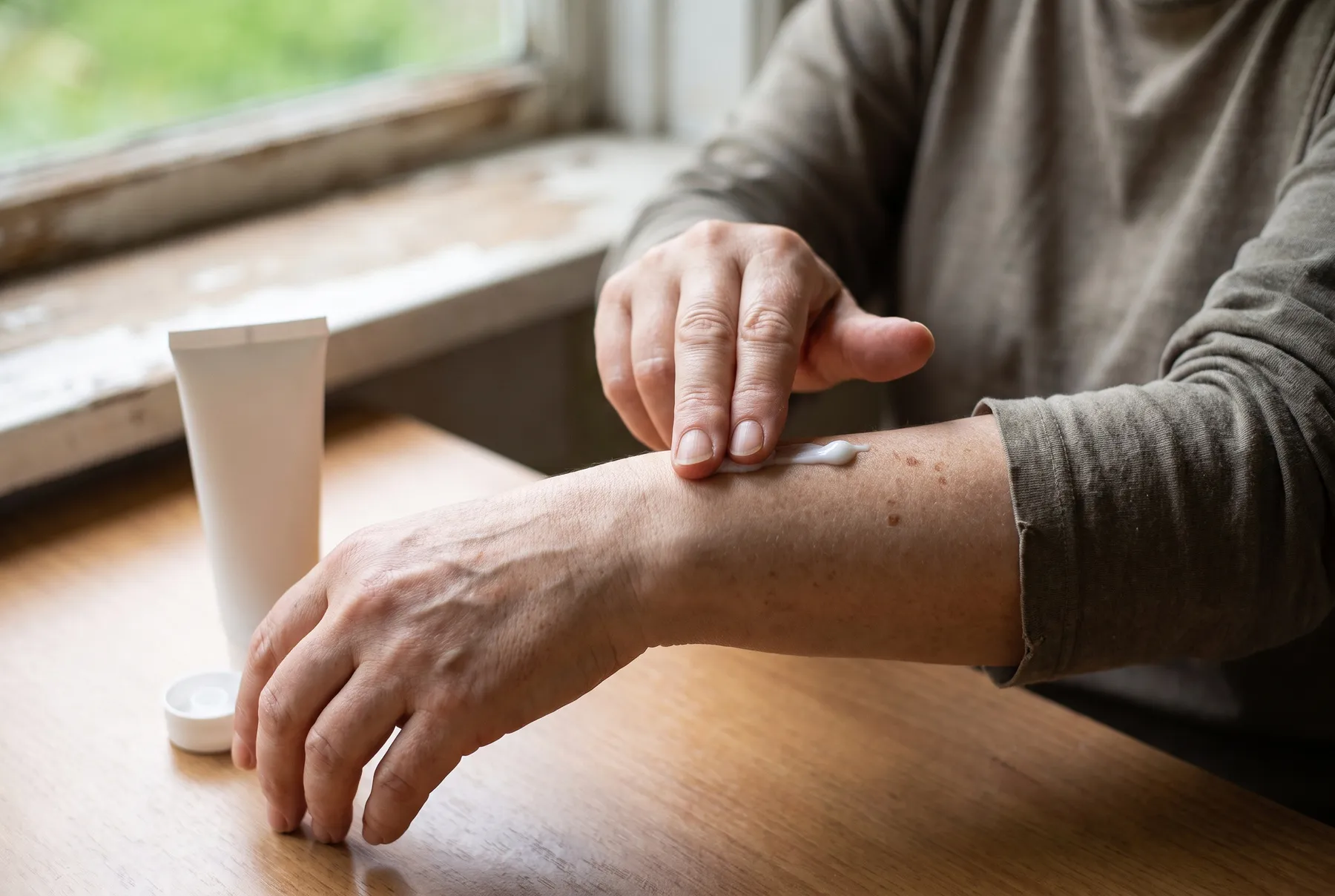
Thinning, dryness and reduced elasticity seen in the skin over time are an ordinary part of ageing. These changes progress slowly, are seen across the skin as a whole and do not gather in one spot.
In separating this picture in two, the World Health Organization (opens in a new tab) defines premature skin ageing as a heading of its own: “loss of skin elasticity at a young age and reduced wound healing”. The best-known cause of this heading is ultraviolet exposure, and it is largely preventable; you can read the detail in Sun Protection and Changes Seen in the Skin Over Time.
Ageing cannot be stopped. Nothing on this page suggests that any method will stop ageing, reverse it or slow it down.
Changes that should be assessed
- A mole that is new, growing, altering in colour or shape, or whose borders are becoming irregular
- A sore that bleeds, crusts over or does not close within weeks
- Widespread patches or a change in colour appearing over a short period
- Dryness, itching or a rash becoming marked across the skin as a whole
- A clear slowing of wound healing
- Other symptoms accompanying the change in the skin, such as weakness, a change in weight, hair loss or irregular periods
The Mesotherapy Application Guideline (opens in a new tab) of the Ministry of Health of the Republic of Türkiye lists the skin-related indication headings as keloid, scar, pigmentation, acne and similar skin diseases. These are not a list of procedures but skin conditions that have been diagnosed; the diagnosis comes first.
In which patients is this assessed differently?
- In patients with thyroid dysfunction, diabetes or insulin resistance (some changes in the skin can run alongside these headings)
- In patients with iron or B12 deficiency (these headings are taken up together in the assessment)
- In patients whose sleep routine is disturbed (sleep is asked about as part of the assessment)
- In patients taking regular medication (some medicines can change the skin and its sensitivity to light; tell your physician which medicines you take)
- In patients with a family history of skin cancer and in patients with a large number of moles (keeping an eye on moles matters all the more)
- In patients who spend long stretches outdoors during the day (sun exposure is asked about separately)
You can read how metabolic headings affect the skin on the Skin Health page and in Topics That Affect the Skin From Within.
How is the assessment carried out?
- History taking. When the change started, how quickly it has progressed, whether it is in one area or widespread; any accompanying symptoms; all medicines and supplements taken; sun exposure and whether you are pregnant.
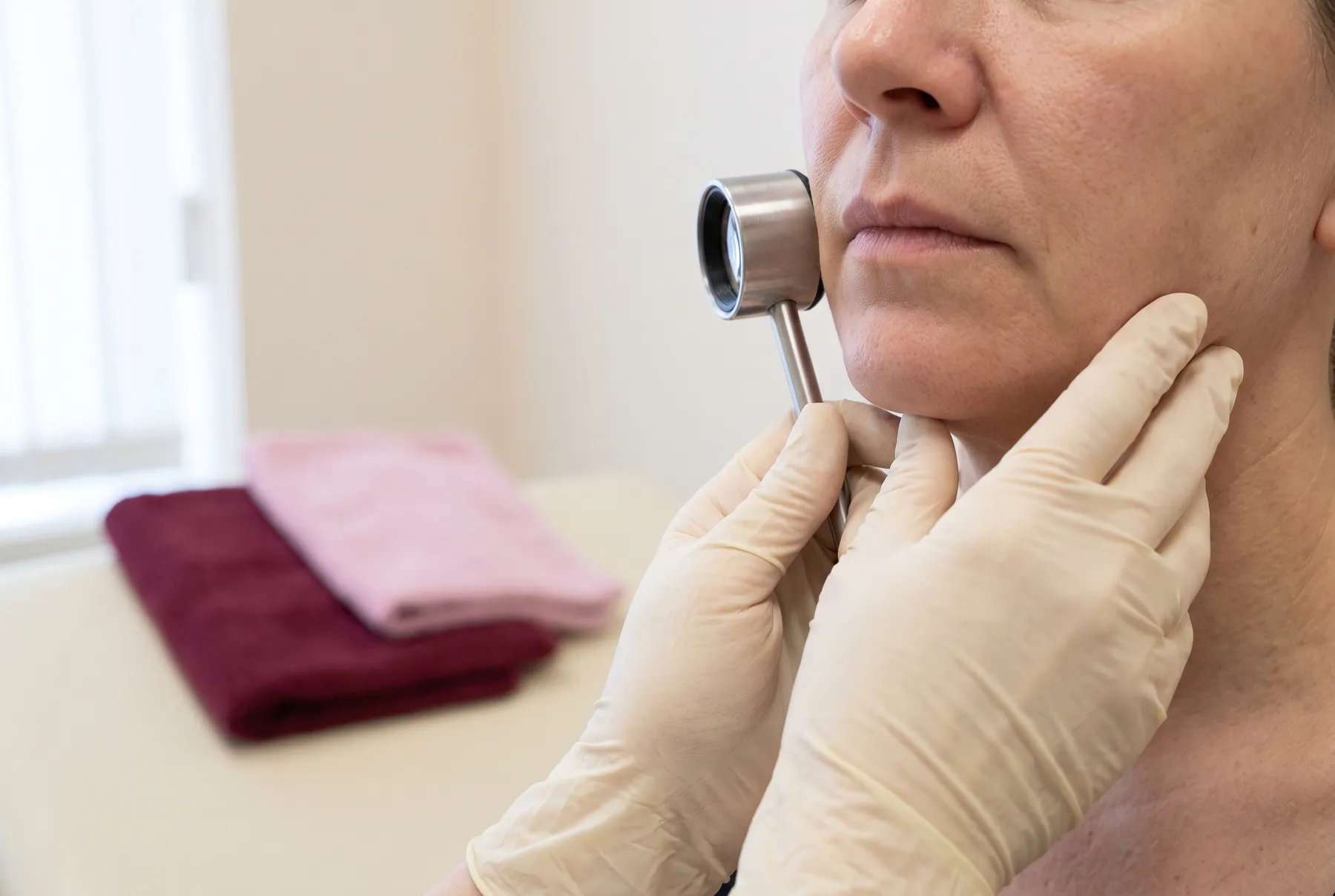
- Examination. The change itself and the skin as a whole are assessed.
- Laboratory tests where needed. Headings such as thyroid function, blood sugar, and iron and B12 status are assessed; which tests are needed is decided at the end of the examination.
- A dermatology assessment if there is an undiagnosed skin lesion. The Mesotherapy Application Guideline sets out this order too.
- Reading the results together. A change in the skin is taken up alongside the overall picture, not on its own.
Points to be aware of, and the limits
A change in the skin does not establish a diagnosis on its own. No item on this page should be read as “this sign means that disease”.
A procedure does not stand in for a diagnosis. If there is an undiagnosed lesion, that is assessed first.
The ordinary course of ageing is not a shortcoming. This page does not present any procedure as necessary for changes seen in the skin; suitability is decided only by examination by a physician.
Do not compare yourself with images you see online. Because the conditions in which they were taken and the editing they have had are unknown, they are no measure at all.
When should you see a physician without delay?
If you notice these symptoms, consult a physician without delay:
- A mole that is new, growing, or changing in colour or shape
- A sore that bleeds, crusts over or does not heal
- A rash or patch that spreads over a short period
- Fever, weakness or unexplained weight loss accompanying the change in the skin
- Widespread itching that does not settle
- Sudden swelling, redness and warmth in the skin
In the event of swelling of the face or tongue, shortness of breath or a change in consciousness, go directly to the emergency department.
Frequently asked questions
Which changes in the skin count as ordinary?
Changes that progress slowly over the years, are seen across the skin as a whole and do not gather in one spot (thinning, dryness, reduced elasticity) are an ordinary part of ageing. Changes that have just started, are progressing quickly or appear in one area should be assessed.
Is ageing a disease?
No. Ageing is not a disease, and the changes seen in the skin with age are ordinary. This page does not present any procedure as necessary for those changes.
Which tests are requested for changes in the skin?
No standard list is applied. Thyroid function, blood sugar, and iron and B12 status can run alongside some changes in the skin; which tests are needed is decided at the end of history taking and examination.
Should the patches on my skin be assessed?
Patches that appear over a short period, that spread, or whose borders and colour change should be assessed. The Mesotherapy Application Guideline lists pigmentation among diagnosed skin diseases; the diagnosis comes first.
Can changes in the skin be related to nutrition?
Some changes in the skin can run alongside iron and B12 status, the course of blood sugar, thyroid function and the sleep routine. These headings are assessed together at the examination; you can read the detail on the Skin Health page.
What should I do about a sore on the skin that does not heal?
See a physician without delay. A sore that bleeds, crusts over or does not close within weeks is among the changes that should be assessed.
If I am considering a skin procedure, what happens first?
An assessment comes first. If there is an undiagnosed skin lesion, a dermatology assessment is brought forward; any accompanying metabolic headings are also reviewed. Suitability is decided at the end of the examination.
Sources
- World Health Organization, Ultraviolet radiation fact sheet, 21 June 2022. https://www.who.int/news-room/fact-sheets/detail/ultraviolet-radiation (opens in a new tab)
- Ministry of Health of the Republic of Türkiye, Directorate General of Health Services, Mesotherapy Application Guideline, Ankara, 2025. https://ekutuphane.saglik.gov.tr/Yayin/694 (opens in a new tab)