“I watch what I eat, but the weight will not come off.” It is one of the sentences heard most often at a consultation.
The short answer
Not losing weight cannot be put down to a single cause. The World Health Organization (opens in a new tab) defines obesity as “a chronic, relapsing disease arising from complex interactions between genetics, neurobiology, eating behaviours, access to healthy food, market dynamics and the wider environment”.
In practice, that definition means that in assessing how weight is behaving, several topics running alongside one another are considered, not one alone. The assessment is not treated as a matter of willpower.
The topics assessed
- Thyroid function is reviewed
- The course of blood sugar and insulin resistance are assessed together with symptoms such as drowsiness after meals and cravings for sweet foods
- How the medicines and supplements you take relate to your weight is assessed; do not stop them on your own initiative
- In the sleep routine, hours of sleep, falling asleep and waking during the night are asked about
- In the meal routine, the number of meals, the intervals between them, meals skipped and how they are spread through the day are addressed
- In the activity routine, time spent sitting during the day and any regular habit of movement are addressed
- Blood lipids and blood pressure are followed alongside weight
- Family history, past illnesses and how weight has moved over time are considered together
In which patients is this assessed differently?
- In patients who are pregnant or breastfeeding (weight management is taken up in a separate framework)
- In patients under 18 (assessment and follow-up are carried out differently from adults)
- In patients with a chronic condition such as diabetes, cardiovascular disease or kidney and liver disease (the assessment is carried out alongside those diagnoses)
- In patients taking regular medication (how the medicines relate to weight is assessed separately)
- In patients with a history relating to eating behaviour (an assessment is made before any restrictive plan is set up)
- In patients with rapid changes in weight over a short period (both loss and gain are assessed separately)
How is the assessment carried out?
- History taking. When weight started to change, the meal and sleep routines, activity habits, family history, and all medicines and supplements taken.
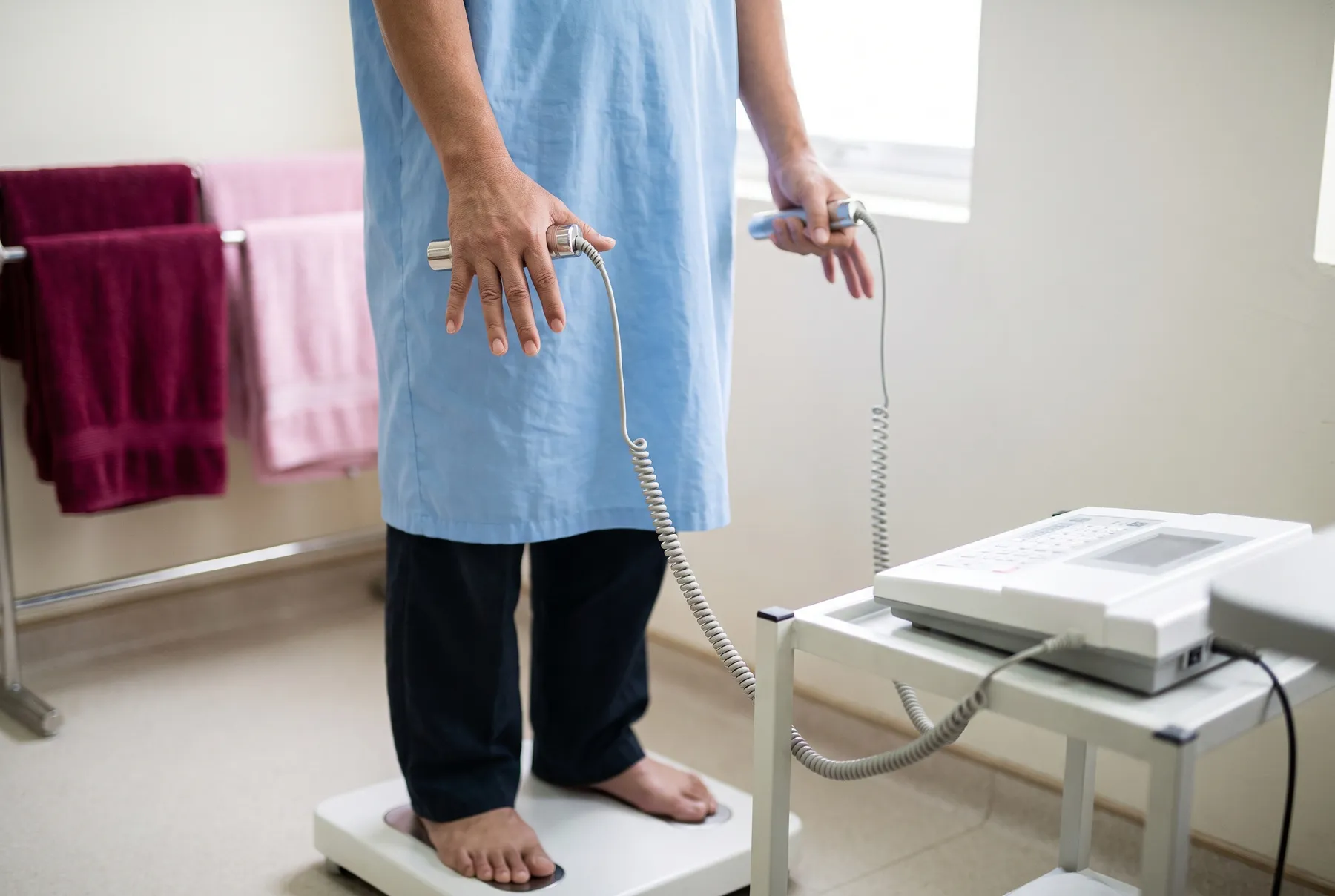
- Measurements. Height, weight and waist circumference are measured. The World Health Organization states that body mass index is “a surrogate marker of fatness” and that additional measures such as waist circumference can help in diagnosis. You can read how waist circumference is measured in How Is Waist Circumference Measured?
- Blood pressure measurement.
- Laboratory tests where needed. Which tests are needed is decided at the end of the examination.
- Reading the results together. The aim is not simply to change a number, but to follow blood sugar, blood pressure, blood lipids and general well-being together.
- Building the plan around the person. The World Health Organization states that management brings together counselling on eating and lifestyle, physical activity and, where needed, medical options, and that other risk factors for non-communicable diseases should be monitored as well.
You can read the process as a whole on the Weight and Metabolism Management page.
Points to be aware of, and the limits
Not losing weight is not a failure. The World Health Organization’s definition makes that plain; obesity is a chronic, relapsing picture arising from complex interactions.
Body mass index is not enough on its own. It is a surrogate marker and is assessed together with additional measures.
No conclusion is reached from a single test. There is no short cut of the “just check this value” kind.
Do not change your medicines on your own initiative. If you think a medicine may be related to your weight, say so at the consultation.
This page does not recommend any method. Which route is suitable is decided only at the end of an examination.
When should you see a physician without delay?
If you notice these symptoms, consult a physician without delay:
- Unexplained and unintended weight loss
- Rapid weight gain over a short period (particularly with swelling in the legs or abdomen)
- Weakness, palpitations, sweating or trembling accompanying the change in weight
- Swelling in the neck, hoarseness or difficulty swallowing
- Excessive thirst, passing urine often and a dry mouth
- Breathlessness at night, excessive daytime sleepiness or loud snoring
- A marked change in your periods alongside the change in weight
In the event of chest pain, sudden shortness of breath or a change in consciousness, go directly to the emergency department.
Frequently asked questions
Can there be a medical reason for not losing weight?
Weight cannot be put down to a single cause. The World Health Organization (opens in a new tab) defines obesity as a chronic, relapsing disease arising from complex interactions between genetics, neurobiology, eating behaviours, access to healthy food and the environment. The assessment considers several topics running alongside one another.
Which tests are requested in a weight assessment?
No definite list can be given in advance. Which tests are needed is decided at the end of history taking, measurements and examination; blood sugar, thyroid function and blood lipids are among the headings reviewed.
Why is thyroid function checked in a weight assessment?
Thyroid function is one of the headings reviewed when weight is assessed. Whether it needs checking, and which tests are requested, is decided at the end of the examination.
Do the medicines I take affect my weight?
The physician assesses how the medicines and supplements you take relate to your weight. Do not stop or change them on your own initiative; bring the full list to the consultation.
Is body mass index enough on its own?
No. The World Health Organization describes body mass index as a surrogate marker of fatness and states that additional measures such as waist circumference can help in diagnosis.
How is a weight target set?
The target is not set on a single number; it is set around the person, with blood sugar, blood pressure, blood lipids and general well-being assessed together, and it is reviewed during follow-up.
Can I use a medicine directly, without an assessment?
No. Medicines used in weight management are used following assessment by a physician and on prescription. You can read the risks of products obtained outside the legal supply chain in Why Are Weight-Loss Medicines Obtained Outside the Legal Supply Chain Risky?
Sources
- World Health Organization, Obesity and overweight fact sheet, 8 December 2025. https://www.who.int/news-room/fact-sheets/detail/obesity-and-overweight (opens in a new tab)
- Ministry of Health of the Republic of Türkiye, Directorate General of Public Health, Obesity. https://hsgm.saglik.gov.tr/tr/obezite (opens in a new tab)