Some of the changes seen in the skin over time come with the ordinary course of ageing; others appear alongside exposure to sunlight. The difference between the two matters: the first is ordinary, while the second is largely preventable.
In brief
The World Health Organization (opens in a new tab) lists premature skin ageing among the effects of exposure to ultraviolet (UV) radiation on the skin, describing it as “loss of skin elasticity at a young age and reduced wound healing”. The same body states that skin cancers arise “primarily from exposure to ultraviolet radiation from the sun or from artificial sources such as sunbeds”.
Protection is not achieved with a single product. It is achieved with a set of habits.
The World Health Organization’s advice on protection
This is not a menu to choose from; it is an order of priority:
- Limit the time you spend in the sun around midday.
- Stay in the shade.
- Wear protective clothing. In the World Health Organization’s words, “sun protection is achieved more by staying in the shade and covering up than by applying sunscreen.”
- Wear a broad-brimmed hat; it protects the eyes, face, ears and neck.
- Wear wrap-around sunglasses that protect against UV-A and UV-B.
- Stay away from artificial tanning devices. The World Health Organization states that using sunbeds increases the risk of developing skin cancer.
The threshold for starting protective measures is defined as well: protective measures should be used once the UV index reaches 3 or above.
In which patients does this matter even more?
- In patients with fair skin and skin that burns easily in the sun
- In patients who spend long stretches outdoors during the day (including those who work outside)
- In children and young patients (exposure accumulates over the years)
- In patients with a large number of moles or a family history of skin cancer
- In patients who have had a procedure on the face (under the Mesotherapy Application Guideline (opens in a new tab) of the Ministry of Health of the Republic of Türkiye, advice about sun protection after a procedure is given to the patient in writing)
- In patients taking medicines that can cause light sensitivity (ask your physician whether the medicines you take have this property)
How is protection built into a daily routine?
- Plan around the most intense hours of the day. Moving the time you spend outside away from midday is the first item in the order the World Health Organization advises.
- Make shade your first choice.
- Count clothing as part of protection; long sleeves and closely woven fabrics provide it.
- Make the hat and sunglasses a habit you pick up on the way out.
- Add sunscreen on top of this routine, not in place of it.
- Follow the UV index. An index of 3 and above is the threshold for starting protection.
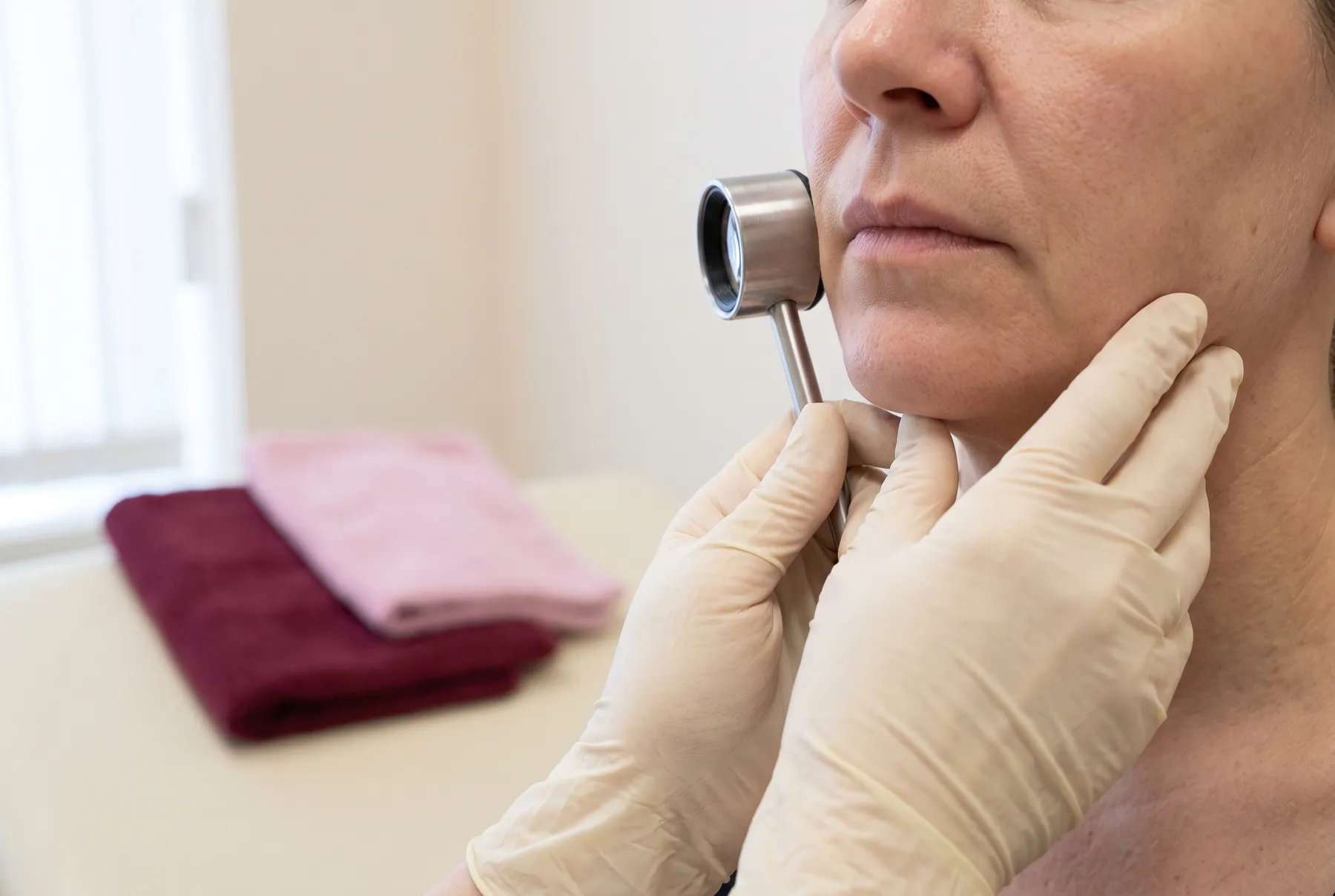
- Keep an eye on changes in your skin; show your physician any mole that is new, growing, or changing in colour or shape.
Points to be aware of, and the limits
Sunscreen on its own is not a protection programme. The World Health Organization’s order is clear: shade and clothing first, then sunscreen.
A tan is not a sign of health. Artificial tanning devices are a source of exposure that increases the risk of skin cancer.
Protection is not only a summer matter. The measure is the UV index, not the season.
Not every change in the skin is down to the sun. Some changes in the skin can run alongside thyroid function, the course of blood sugar, and iron and B12 status; you can read those headings on the Skin Health page and in Topics That Affect the Skin From Within.
If there is an undiagnosed skin lesion, a dermatology assessment comes first. This is also the order the Mesotherapy Application Guideline sets out.
When should you see a physician without delay?
If you notice these symptoms, consult a physician without delay:
- A mole that is new, growing, or changing in colour or shape
- A sore that bleeds, crusts over or does not heal
- Patches with irregular borders and uneven colour
- A mole that becomes itchy or painful, or a change in sensation in it
- Severe sunburn (particularly if blistering accompanies it)
- A widespread rash appearing after going out in the sun
If a high fever, confusion, dizziness or vomiting accompanies sunburn, go directly to the emergency department.
Frequently asked questions
Which changes in the skin does sunlight lead to?
The World Health Organization lists premature skin ageing among the effects of exposure to ultraviolet radiation, describing it as “loss of skin elasticity at a young age and reduced wound healing”. The same body states that skin cancers arise primarily from exposure to ultraviolet radiation.
Is sunscreen enough on its own?
No. The World Health Organization puts it plainly: “Sun protection is achieved more by staying in the shade and covering up than by applying sunscreen.” Sunscreen is added on top of shade and clothing, not in place of them.
At what threshold should sun protection start?
The World Health Organization states that protective measures should be used once the UV index reaches 3 or above. The measure is the UV index that day, not the season.
Are sunbeds safer than the sun?
No. The World Health Organization advises avoiding artificial tanning devices and states that using sunbeds increases the risk of developing skin cancer.
Are a hat and sunglasses really necessary?
The World Health Organization advises a broad-brimmed hat to protect the eyes, face, ears and neck, and wrap-around sunglasses that protect against UV-A and UV-B.
I have had a procedure on my face; does my sun protection change?
Advice about sun protection after a procedure is given to you in writing. This forms part of the information the Mesotherapy Application Guideline requires; the detail of that advice is set according to the procedure and to you.
When should I have the moles on my skin assessed?
Seek advice without delay whenever you see a change that is new, growing, or altering in colour or shape, or one that bleeds, crusts over or does not heal. If there is an undiagnosed skin lesion, a dermatology assessment comes first.
Sources
- World Health Organization, Ultraviolet radiation fact sheet, 21 June 2022. https://www.who.int/news-room/fact-sheets/detail/ultraviolet-radiation (opens in a new tab)
- Ministry of Health of the Republic of Türkiye, Directorate General of Health Services, Mesotherapy Application Guideline, Ankara, 2025. https://ekutuphane.saglik.gov.tr/Yayin/694 (opens in a new tab)